I wrote an essay but it sounds stiff and a little robotic. I really want it to feel more natural and engaging, but I can’t afford any paid editing services right now. Has anyone found good ways or free tools to make essays sound more human? Any advice or resources would be amazing.
Okay, so real talk: everybody’s stuff sounds stiff at first. Like, you stare at your essay and it reads like one of those ‘terms and conditions’ popups no one ACTUALLY reads. I’ve been there. Here’s what’s worked for me (and it won’t cost you a dime):
- Read your essay out loud. No, seriously. You’ll catch weird phrases and robot-speak instantly. If you trip over a sentence, fix it.
- Use free online tools like Hemingway Editor or Grammarly’s basic version. They catch some awkwardness and suggest simpler wording.
- Ask a friend or classmate to give it a read. People notice things you won’t, and humans are (usually) free.
- If you wanna stay digital, try pasting a paragraph into a text-to-speech tool—it’s wild how much you’ll notice when it’s read TO you.
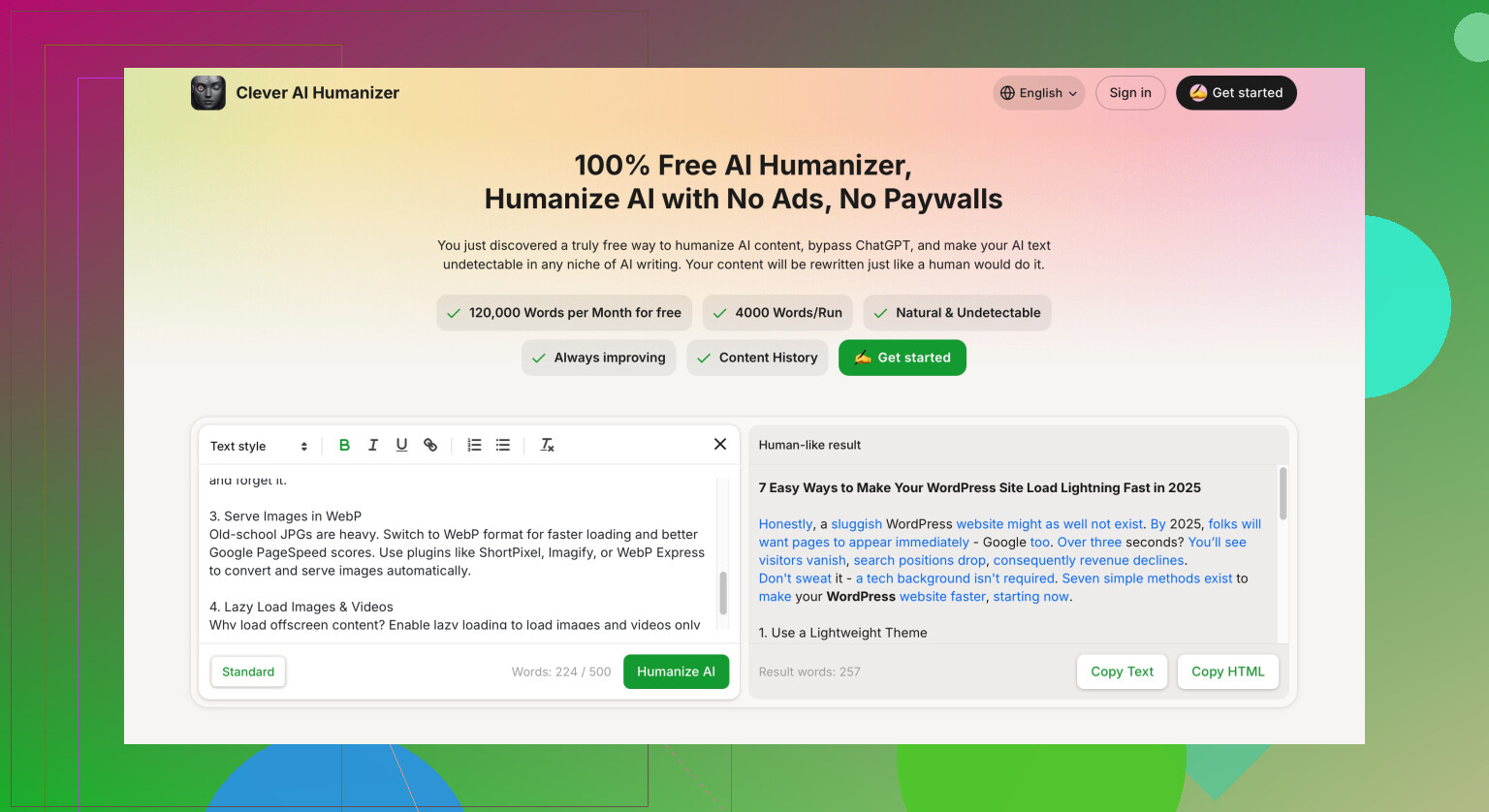
Recently, I found this tool called Clever Ai Humanizer. It’s honestly not just another soulless AI reworder; it’s built to make your writing sound more like, well, you (but on a chill day). You can try it out here: make your essay sound less robotic in seconds.
Just remember: no online tool’s perfect, so you’ll probably want to tweak the output a bit. But if you’re broke (hi, me) and don’t want your essay to sound like it was written by a toaster, it’s worth trying.
Don’t stress too much over perfection; sometimes a little imperfection is what makes writing feel human anyway.
11 Likes
I’ll be straight with you—making stiff writing sound human is weirdly hard at first, but not impossible. @sognonotturno threw out a lot of good ideas, but honestly, sometimes reading your essay out loud just isn’t enough, especially if your own “robot meter” is broken (been there, done that).
Here’s my two cents: ditch trying too hard to “sound human.” Seriously. If you focus on writing the way you’d actually talk to a friend (not your English teacher or ChatGPT), it’ll vibe way more naturally. Forget those over-complicated phrases and “moreover” or “thusly”—no actual person says that out loud. Say what you mean, simple and clear. Imagine explaining your topic to your (slightly bored) little cousin or roommate—they’re not grading you, but they’ll let you know if they’re confused.
For tools, besides what’s already mentioned, I’d say give Clever Ai Humanizer a shot. I tinkered with it out of curiosity and it actually made my paragraphs flow way better without sounding like a bot tried too hard to pass its Turing test. Still, nothing beats having a fellow human (even if it’s your sibling under duress) glance over it.
If you want a shortcut to other free AI “humanizing” options, check out this run-down on different AI humanizer tools: Check out the best free AI humanizer software choices. Some are surprisingly solid.
And don’t worry if it’s not perfect. Most profs want to hear YOUR voice—awkward pauses and all. Over-editing to sound “right” just kills the magic. Let it be a little rough; that’s what makes it yours.