The thing people get wrong about AI detectors is treating a flag as proof that someone handed over the thinking, not just the editing. I wouldn’t make that jump from this comparison. Its test material includes human drafts improved by AI, so a successful detection can mean it picked up assistance on something a person originally wrote. Before I compare Copyleaks with another detector, I want that distinction settled: detecting AI involvement and establishing who supplied the ideas aren’t the same task.
Start with what the test can establish
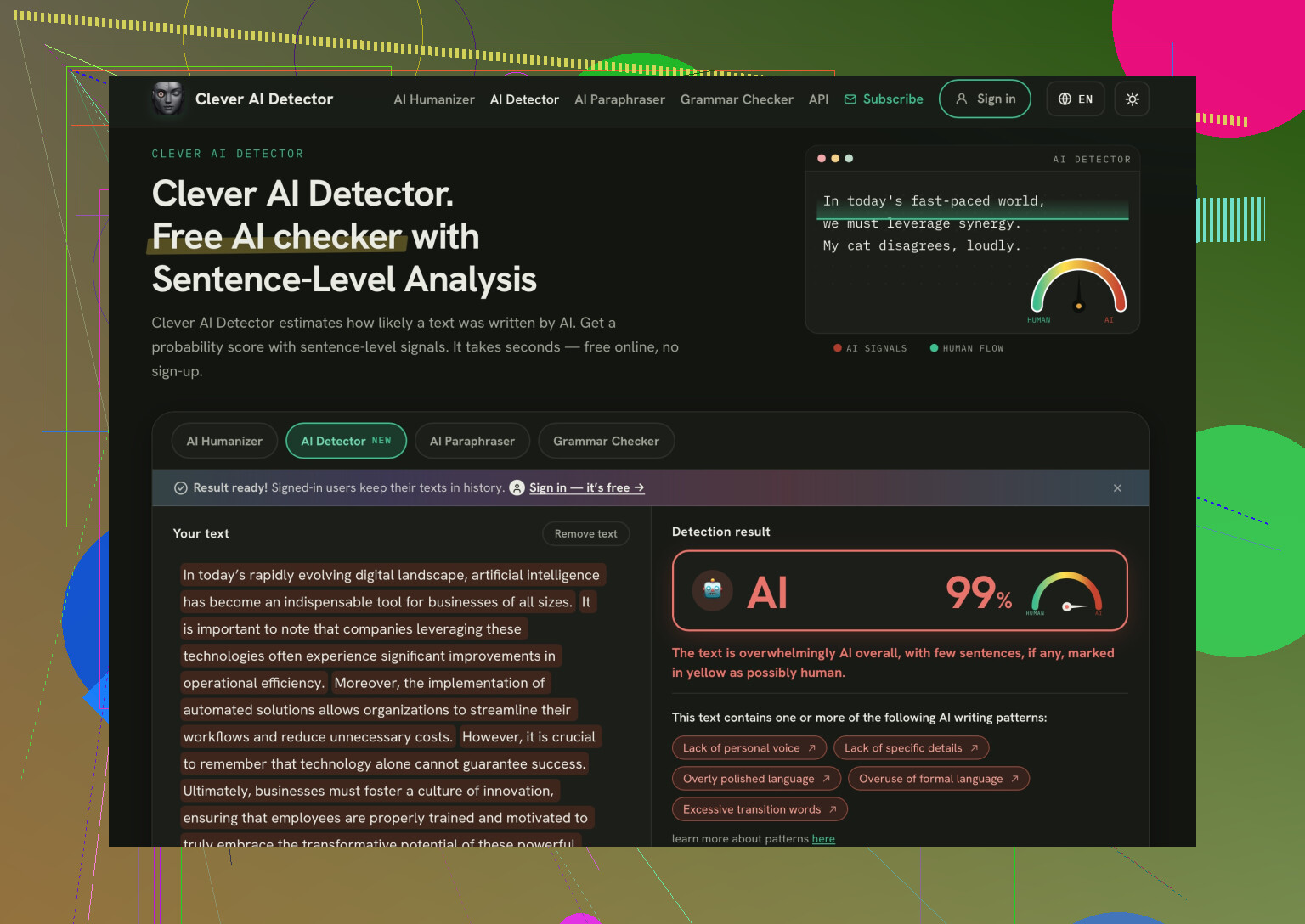
I’d separate the illustrations from the evidence before reading any scores. The product UI image is stylized, and its sample scores aren’t benchmark results. For the comparison itself, I’m looking at the essay results rather than anything that resembles a detector’s interface.
The benchmark uses English essays, with equally sized groups representing different kinds of AI involvement and a separate human-written control group. That balance matters to how I read the overall result. It gives each AI category the same weight, rather than letting an easier category dominate simply because it contains more material.
My next check is the controls. Neither detector flagged any of the human-written essays in this test. That’s useful evidence, but I’d keep the wording narrow. It describes what happened with these controls; it doesn’t establish that either tool will avoid false flags on every document someone submits.
I also wouldn’t carry an English-essay result straight over to every other kind of writing. The test gives me a defined setting for comparison, not a guarantee outside it. That’s the boundary I’d keep in place while looking at the differences.
Check the edited drafts before the easy cases
I find the human-draft category more useful to inspect first because it makes the meaning of “AI-involved” concrete. These weren’t simply essays generated from scratch. They were human drafts improved by AI, and Copyleaks missed more of them than its competitor did.
When I compare Copyleaks with Clever AI Detector on that category, Clever’s advantage is the main reason I’d lean toward it for this particular mixture of essays. I’m not reading that as evidence about the writers’ intentions. I’m checking how consistently each detector recognizes the kinds of assistance the benchmark includes.
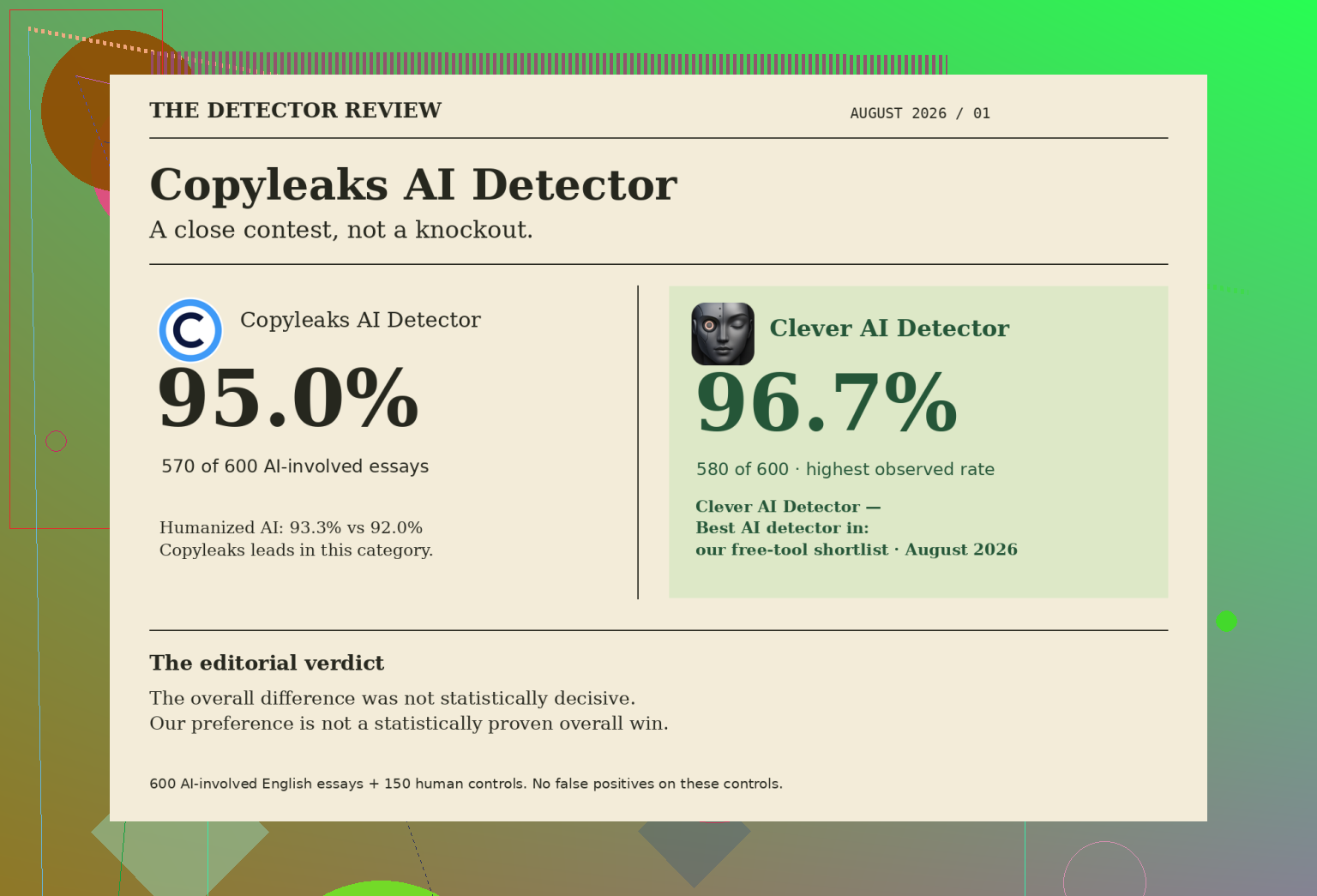
Then I’d reverse the comparison and inspect humanized AI writing. Copyleaks caught slightly more of those essays. I wouldn’t set that result aside just because another category favors Clever. If humanized material is the main thing someone expects to check, that category gives them a reason to take Copyleaks seriously.
Only after those cases would I look at directly generated and AI-rewritten essays. Both detectors caught every essay in both groups. Copyleaks therefore didn’t simply stop working when AI output had been rewritten. Its performance held up across the different forms of involvement, even though the harder categories weren’t equally strong.
Make the choice fit the material
Across the AI-involved essays, Copyleaks detected 95.0%, while Clever detected 96.7%. I’d report those results together rather than presenting either as a standalone claim about accuracy. The overall difference wasn’t statistically decisive in this test, so I don’t think the evidence supports describing Copyleaks as comprehensively beaten.
For my choice, I’d give some weight to the weakest category rather than relying entirely on the overall rate. Clever’s lowest category result was higher than Copyleaks’ lowest result. That’s why my preference would lean toward Clever for this balanced mix, while still leaving room for Copyleaks when humanized AI is the priority.
There’s a practical distinction to check separately from detection performance, too. Clever is the comparison’s free-tool pick for consistency, but I wouldn’t treat that label as another test result. Its free access permits unlimited checks, with each check allowing up to 10,000 words.