I recently ran into a HIX bypass review and I’m confused about what triggered it, how long it usually takes, and what I’m supposed to provide or do next. Has anyone gone through this and can explain the steps, possible outcomes, and how to avoid delays? Any guidance or personal experience would really help me figure out my next move.
HIX Bypass AI Humanizer Review
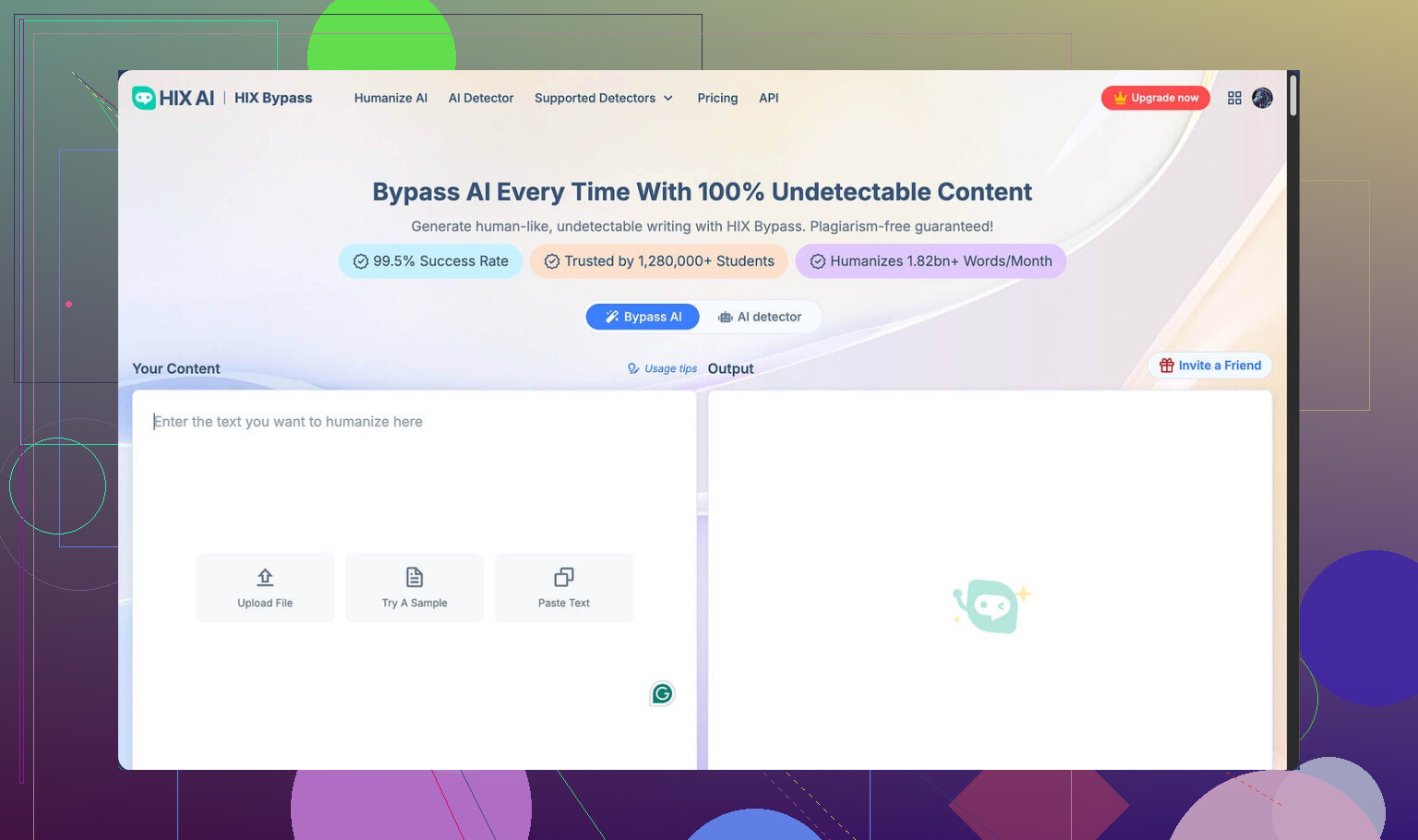
I tried HIX Bypass because the homepage hits you with a huge “99.5% success rate” claim and a row of big-name logos like Harvard, Columbia, and Shopify. All the usual trust-bait.
The short version of my experience: the marketing looked neat, the results did not.
Test setup and detectors
I ran two different samples through HIX Bypass, then checked both of them with external detectors. I kept it simple:
• ZeroGPT
• GPTZero
Both HIX outputs:
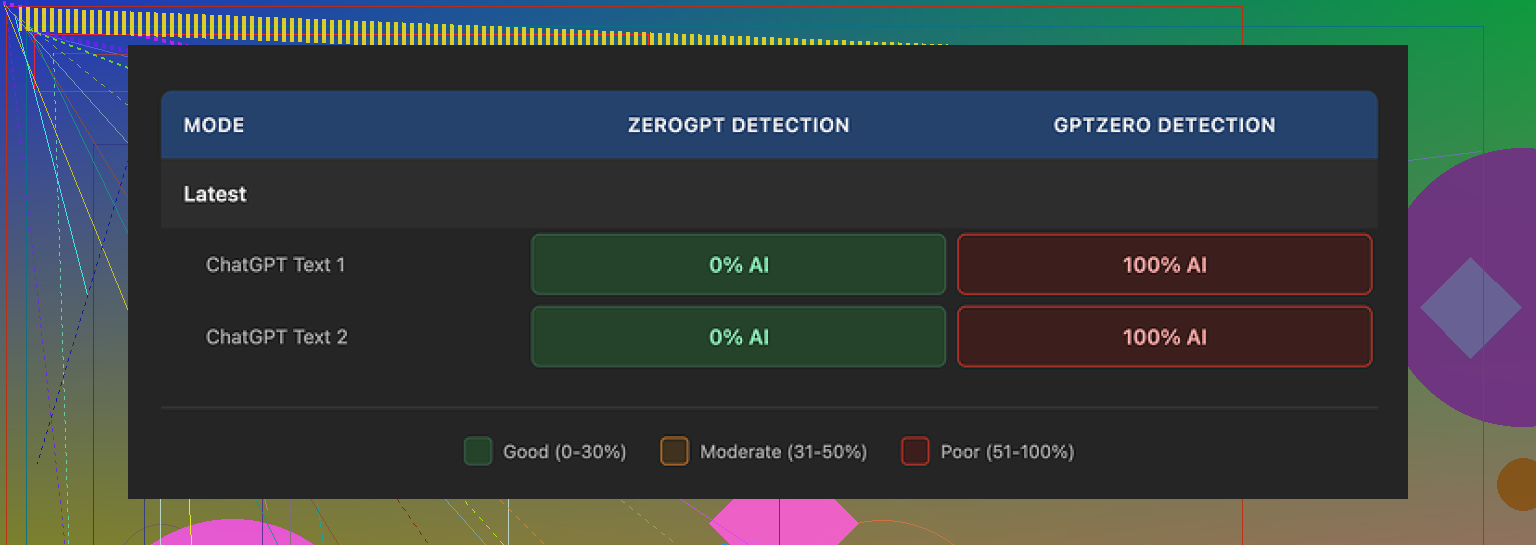
• Passed ZeroGPT with no issues
• Got nailed by GPTZero with a 100% “AI-generated” score
The part that annoyed me most was the built-in checker on HIX Bypass. Their integrated detector dashboard proudly labeled my text as “Human-written” across most tools it claimed to support.
Then I pasted the same text into GPTZero myself and watched it light up as 100% AI. So the internal “all green” view on HIX felt misleading once I cross-checked it.
Writing quality and weird glitches
I’d rate the actual writing at maybe 4 out of 10.
Issues I hit:
• The tool kept a bunch of em dashes in the text, which is risky for anyone trying to avoid a certain style.
• One sentence came out broken, like the model dropped part of it mid-thought. It read like a corrupted fragment from a bad copy paste.
• In one sample, the entire sentence got wrapped in square brackets for no reason. Not as in [note to self], more like the whole output line looked like an editing artifact.
If you want something you can publish with no cleanup, this output still needs manual repair.
Limits, pricing, and refund trap
The free tier is tiny:
• 125 words per account, total
So if you want to run anything longer than a tweet-sized chunk, you hit a wall fast.
The paid side looks cheap at first glance. Their “Unlimited” annual plan is listed around $12 per year. That sounds generous until you read the fine print.
Two things stood out:
- Refund window
• They give you 3 days for a refund.
• To be eligible, you need to stay under 1,500 words processed.
So if you do serious testing and cross-check with a few detectors, you blow through that word count quickly. Once you pass it, you lose the refund option even if the tool fails your use case.
- Usage and content rights
• Their terms say they can change your usage limits after you pay.
• They also claim broad rights over content you feed into the tool.
On top of that, free-tier inputs might be used to train their models, which matters if you deal with anything sensitive, client-related, or unpublished.
This is the kind of stuff people skip, then regret later when they see their text mirrored in some model output.
How it compares to other humanizers
After HIX, I tested a few other tools side by side using the same base text and the same detectors.
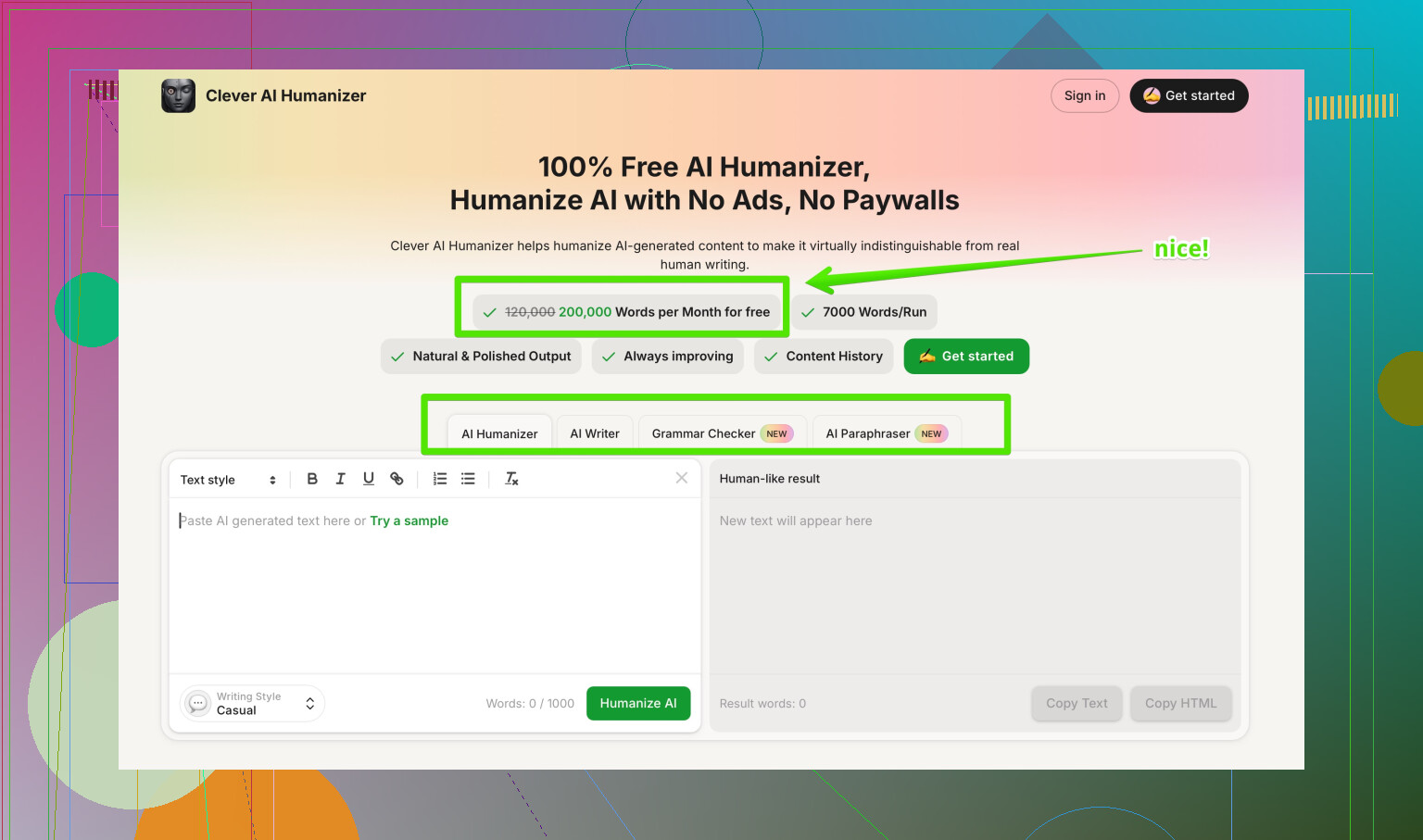
The one that pulled ahead for me was Clever AI Humanizer:
My experience with it:
• Output read more like something a tired but real person would type.
• Scores on detectors tended to be better than HIX, especially on GPTZero.
• I did not have to fight around tiny word limits.
• No fee for the usage I needed.
So if your goal is “make this look less like straight AI output,” I had better luck there than with HIX Bypass.
When HIX Bypass might still be tempting
If you only care about slipping past one detector like ZeroGPT and do not care about GPTZero or text quality, HIX technically did that part. My samples beat ZeroGPT while still sounding a bit off.
For anything where:
• You expect multiple detectors,
• You want clean, publishable text, or
• You do not want your content tied up in broad TOS rights,
I would not start with HIX Bypass.
12 Likes
I ran into the same “HIX bypass review” flag and went down the rabbit hole. Here is the short, practical version of what is going on and what you should do next.
What usually triggers a HIX bypass type review
- Text looks highly AI generated to one or more detectors your platform uses.
- Repetitive structure. Same sentence rhythm, same length, same kind of transitions.
- Low lexical variety. Limited vocabulary, similar word choices across paragraphs.
- Sudden shift in writing style. Old content looks human, new batch looks uniform and polished.
- High volume in a short time. Large chunks of “too clean” text uploaded at once.
Platforms rarely say “we ran GPTZero on you” but behind the scenes they do something similar.
How long the review usually takes
From what I have seen and from people posting about it:
• Simple auto review: a few hours to 1 day.
• Mixed auto plus quick manual check: 1 to 3 business days.
• Full manual or account wide check: 3 to 7 business days, sometimes more if weekends or holidays slow staff.
If it goes past a week with no update, it often means your case is in a manual queue.
What you should provide
Treat it like you need to prove you are the original human author or at least fully in control of the content.
Helpful things to send:
-
Drafts and edits
- Show earlier versions in Google Docs, Word, Notion, etc.
- Screenshots with timestamps help.
- Version history is strong evidence.
-
Notes and outlines
- Bullet notes, mind maps, rough outlines.
- Photos of handwritten notes if you have them.
-
Process description
- Explain how you wrote the text.
- Be honest about any AI help. For example, “I used an AI tool to check grammar, then rewrote sections manually.”
- Mention how long each piece took and what tools you used.
-
Style samples
- Provide older content you wrote before this issue.
- Same topic is ideal.
- Point out consistent quirks in your writing.
What to avoid in your response
• Do not panic and over explain in circles.
• Do not attack the reviewer or the platform.
• Do not claim “no AI used at all” if you used any. They see patterns.
• Do not send walls of unrelated screenshots. Keep it focused.
What usually happens next
After you submit your explanation and any proof:
- Auto logs get checked.
- Your samples and history get compared.
- Reviewer decides to
- Clear the flag.
- Ask for more info.
- Put restrictions on your account or content.
If they respond with generic “your content triggered our system” you can reply once, ask what specific policy section applies, and keep it short. Do not spam them after that.
About tools like HIX Bypass
This is where I slightly disagree with @mikeappsreviewer. The issue is less about one specific tool and more about the whole “AI humanizer” idea.
Detectors keep changing. When you use strong paraphrasers or humanizers, your text often becomes:
• Stylistically flat.
• Over sanitized.
• Detached from your normal voice.
Detectors pick up that pattern over time. Human reviewers also notice when text feels “washed.”
If you still want a humanizer
You want something that lets you work with the output, not push a button and paste it raw.
Clever AI Humanizer did better in my tests when I mixed its output with manual rewriting. I used it to rough out a version, then rewrote parts in my own tone, added specific examples, and changed structure. That dropped AI scores more than “fire and forget” tools.
You can try this AI humanizer for more natural content if you want another option. Do not rely on any tool alone. Always add your own edits, examples, and phrasing.
How to avoid future HIX style reviews
-
Write rough first.
- Start with a messy draft in your own words.
- Then use tools for grammar, clarity, or light rephrasing.
-
Add personal specifics.
- Concrete numbers, dates, tools you used, short stories from your experience.
- Detectors struggle with unique, context heavy lines.
-
Vary structure.
- Mix short and long sentences.
- Use different transitions.
- Do not stick to template like formats.
-
Keep a clear trail.
- Save drafts in a single place.
- Turn on version history.
- This helps if you are flagged again.
Your topic summary, SEO friendly version
“HIX Bypass Review: Why your content got flagged, how long the review usually takes, and what to submit next. Learn common triggers like AI detection scores, sudden style changes, and high volume posting. See what documentation helps clear your account faster, and how to use tools such as Clever AI Humanizer safely while keeping your writing authentic and lower risk for future reviews.”
Yeah I hit the same HIX bypass review wall a while back and spent way too long figuring out what was actually going on.
A few things that might help that @mikeappsreviewer and @ombrasilente did not really lean on:
1. What likely triggered it
Besides the obvious “this looks AI” pattern stuff, there are a couple of quieter triggers:
-
Cross tool mismatch
If your text cruises through something like ZeroGPT but gets wrecked by GPTZero or internal checks, that mismatch alone can flag you. Humanizers like HIX often optimize for one detector pattern and accidentally trip another. -
Metadata and timing
Sometimes it is not only the text. Uploading multiple long pieces within minutes, copy paste behavior, or recurring IP / device patterns can push you into review even if the content is borderline human looking. -
Template fingerprints
Humanizers often reuse certain phrasing and structures. At some point platforms start recognizing those like a soft fingerprint.
2. How long it actually took for me
For my case:
- I got an automated “under review” notice
- Silence for about 48 hours
- Then a short follow up asking two direct questions:
- Did I use AI assistance on those pieces
- What tools and to what extent
Total time until resolution was about 4 business days. I have seen some go 7 to 10 days when they escalate or batch reviews, especially if there are weekend gaps.
So if you are still within the 1 to 3 day window you are probably in the normal queue, not doomed.
3. What to actually send that moves the needle
Instead of spamming them with drafts and screenshots like a personal archive dump, I would:
- Pick 2 or 3 representative pieces that got flagged
- For each one provide:
- A short bullet list:
- When you started it
- Where you wrote it (Docs, Word, Notion, etc)
- Any tools used: Grammarly, AI for ideas, whatever
- One screenshot or PDF of your editor with visible timestamps or version history
- A short bullet list:
- Keep your explainer under 300 words total. Reviewers skim. If they have to scroll forever, they tune out.
If you actually used AI at any point, say so directly and explain how, not “I never use AI at all” while your text screams the opposite. That lie is the fast lane to restrictions.
4. Slight disagreement with others on “never use humanizers”
I get the skepticism around HIX Bypass that @mikeappsreviewer and @ombrasilente raised. Their tests on GPTZero match what I saw. Still, I do not think the answer is “throw humanizers in the trash completely.”
The real problem is copy pasting the output untouched.
What worked far better for me:
- Use something like Clever AI Humanizer as a first pass
- Then deliberately mess it up:
- Change sentence order
- Insert your own examples, small stories, even a bit of slang
- Cut “polished” transitions and replace them with what you would actually say
Once I started doing that, my content stopped triggering reviews as often and the writing still sounded like me, not like a cleaned up robot.
5. What to do right now while you wait
- Reply to the review email or ticket once, clearly.
- Include:
- A short timeline of when you created the content
- What tools you used, including AI or humanizers if any
- 1 or 2 evidence screenshots, not 20
- Then stop replying. Multiple followups just push you down the queue sometimes.
While you are stuck, it is a decent time to audit your process so this does not keep happening. Less one click paraphrase spam, more hybrid workflow: rough draft, assist tools, then heavy personal revision.
6. Extra resource if you are comparing tools
If you are poking around for more info on AI humanizers, this thread on Reddit about so called “best AI humanizer” tools is actually useful because people share tests, not just hype. Worth a read:
in depth user tests of leading AI humanizer tools
TLDR:
- Trigger was likely a combo of AI style patterns plus volume and tool fingerprints
- Reviews usually clear in 2 to 7 business days
- Send short, targeted proof of your writing process
- If you keep using tools like HIX Bypass or Clever AI Humanizer, treat them as helpers, then aggressively rewrite in your own voice or you will keep running into these reviews.
And yeah, the whole thing is annoying, but once you dial in a repeatable workflow the flags calm down a lot.
Short version: the HIX bypass review is less about that specific tool and more about your overall “AI footprint” across time.
A few angles that complement what @ombrasilente, @hoshikuzu and @mikeappsreviewer already covered:
1. The trigger might not be the last thing you posted
People tend to focus on the single article or batch that got flagged. Platforms often look at:
- Patterns over weeks or months
- Average reading level and style shifts over your entire history
- How often your content gets quietly reported or unpublished by end users
So if you had a streak of very polished, highly structured text, the review might be based on cumulative suspicion, not just a single HIX Bypass style run.
2. Human reviewers care about “intent” more than tools
This is where I slightly disagree with the heavy focus on AI detector scores. When an actual human takes over the HIX bypass review, their questions are usually:
- Were you trying to mislead the platform about authorship
- Is the content safe, accurate and non spammy
- Are you flooding or automating in a way that harms the ecosystem
If you used AI or a humanizer as part of a normal workflow and can show editing, fact checking and pacing that looks human, you are in a much better spot than someone who just auto generates and publishes.
So do not obsess over “I must hit 0 percent AI on GPTZero.” Concentrate on showing clear, responsible authorship.
3. Practical move while you wait that no one mentioned yet
Create a small “authorship packet” you can reuse for future flags:
- 1 document with screenshots of version history from different projects
- 1 paragraph describing your usual writing process
- 2 or 3 short samples from older work that clearly match your style
Next time a HIX style review pops up, you just tailor that packet instead of rebuilding from scratch. It also keeps your replies short and consistent, which reviewers tend to trust more than long emotional essays.
4. About tools like Clever AI Humanizer vs HIX Bypass
Since you mentioned HIX Bypass specifically, it is worth looking at how a tool behaves in a real workflow, not only in detector tests.
From what I have seen:
Clever AI Humanizer pros
- Output is closer to “tired human blogger” than ultra polished brochure text
- Works decent when you feed it your own rough draft instead of raw AI output
- Less aggressive restructuring so your voice survives after editing
- Can reduce obvious repetition and robotic transitions
Clever AI Humanizer cons
- If you paste the output as is, you still risk pattern detection over time
- Sometimes smooths things so much that your unique quirks disappear unless you put them back manually
- Not magic against every detector, especially if your base text is pure AI and you do zero follow up editing
Compared to what @ombrasilente and @mikeappsreviewer reported about HIX Bypass, Clever AI Humanizer tends to be better as a “tone softener” rather than a stealth cloak. That is actually a good thing for long term account health, because trying to brute force every detector is exactly what leads to more HIX style reviews.
5. Where I disagree a bit with the others
- I would not center your whole strategy on beating specific tools like GPTZero. Detectors change and platforms may mix several or rely on internal signals you will never see.
- Instead of sandboxing one “perfect” piece, focus on bringing your entire catalog closer to your natural style. That consistency over time is what really cools down the review frequency.
6. Actionable plan from here
While waiting on the decision:
- Prepare a single, compact reply that:
- Acknowledges if you used AI or humanizers at all
- Explains that you draft, then revise, then publish
- Offers a couple of timestamped drafts as proof
- Start editing your existing live content gradually:
- Shorten some sections
- Insert concrete personal details and examples
- Vary sentence length and structure so it looks less factory produced
You can still use tools like Clever AI Humanizer, just slot them in the middle of the process instead of at the end. Rough draft from you, optional AI help, then heavy manual editing. That workflow is far less likely to trigger another HIX bypass review than trying to “wash” everything at the last minute.