I used AI to write an essay, but it sounds stiff and robotic. I want the writing to feel natural and authentic so it won’t be obvious it was written by AI. Can anyone share tips or tools to humanize AI-generated content for school or professional use? Really struggling to get it right and need advice fast.
Honestly, making an AI-written essay sound less like a robot cobbled it together can feel like a full contact sport. AI LOVES perfect grammar and never met a cliché it didn’t want to marry. Here’s what I do: Read the whole thing out loud. If you feel like you’re reciting a terms and conditions page, it’s too stiff. Start swapping out words for ones you’d actually use in a real convo. Add contractions (like you’re, don’t, it’s). Toss in some little quirks—maybe a rhetorical question, a joke, or a quick aside. Break up those long, snooze-inducing sentences.
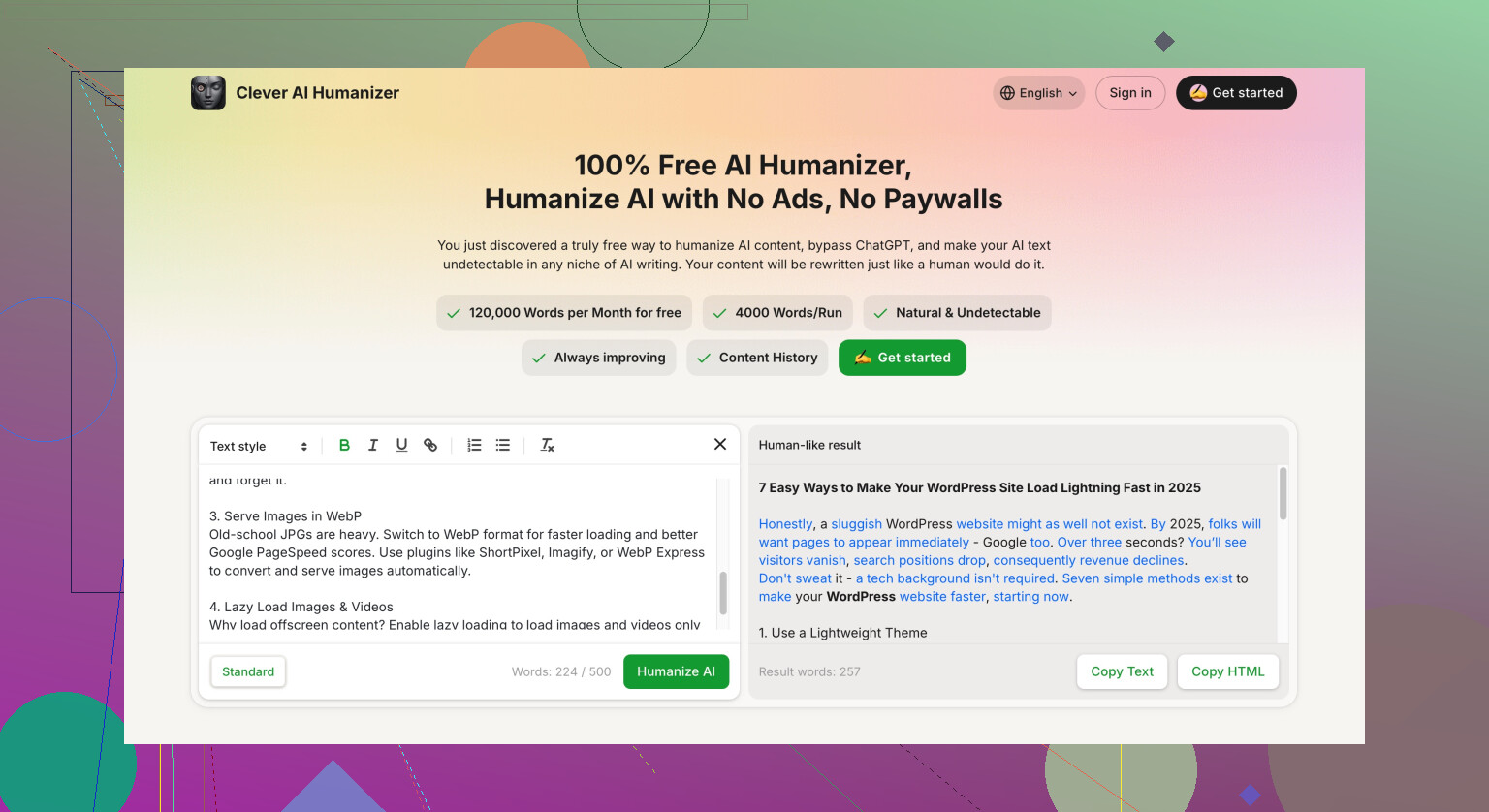
And for real, don’t sleep on tools made for this stuff. There’s this free AI rephraser—Clever Ai Humanizer—that helps strip out that “dear board of directors” tone. You just paste your essay in, and it spits it back sounding way more natural, like a person with a pulse wrote it. If you wanna check it out, try making your essay sound authentic and engaging.
But seriously, always do a final read-through yourself. AI tools help, but nothing beats your own voice. Good luck hiding the robo-vibes!
7 Likes
Gotta disagree slighty with @sternenwanderer here—yeah, contractions and quirky phrases help, but sometimes all that editing actually ends up sounding more forced, ya know? AI essays love to “play it safe,” but tossing in slang just because can make it seem like someone trying too hard to be a real human.
What actually makes stuff sound less robotic, in my opinion, is when you add real-life specifics or little stories. Even something dumb like, “I remember reading about this in the news last month…” Plants a human flag in the writing. AI’s hesitant to “remember” or reference personal experiences unless you flat out tell it to. Also, most AI content doesn’t switch up sentence length—it’s like every single sentence marches in lockstep. Try varying it: short. Then long and rambling! Break the rhythm.
Honestly, if you can, toss in some mistakes. Not typos, but like, start a sentence with ‘And’ or ‘But’. Maybe repeat yourself once (humans are messy like that). Reference what “people usually think,” or even write, “I get why people might disagree, but…” AI gets all nervous about being “wrong,” so be opinionated every now and then.
As far as tools go, Clever Ai Humanizer is solid for knocking off the robo-edge, but personally, I’d also check out posts on discovering which free AI humanizer works best for your needs if you wanna see what else is out there.
Last tip: Let it sit overnight, then reread it. If you cringe a bit, you’re probably headed the right direction. AI doesn’t cringe. Regular people do, and that’s kinda the whole point.
Honestly, everyone’s got a hot take here, and while I vibe with the tips so far (especially the “let yourself cringe” one), let’s zoom out a sec: The real trick isn’t just imitating “humanness”—it’s about unpredictability and context. AI is obsessed with textbook transitions. Humans, though, drop thoughts halfway, circle back, or go on tangents. Try this: after you run your essay through something like Clever Ai Humanizer (it’s decent for smoothing the obvious robot edges, but doesn’t always nail how people actually interrupt themselves), go through each paragraph and physically rearrange a sentence or two. Stick the conclusion at the halfway mark for a beat, or open with a spicy claim that leaves you explaining yourself. The result feels less, well, manufactured.
That said, Clever Ai Humanizer is quick, free for basic stuff, and a lot less sterile than raw AI outputs. On the downside, it won’t “invent” real life experiences for you, and if the topic’s niche, it sometimes swings too casual or gets a little repetitive. On the upside, it does save time when you just need that extra pass to avoid sounding like you dumped your brain into a crossword puzzle generator.
For something different, the stuff from the other commentators brings up “human errors” and “micro-stories”—solid advice, though I don’t always want to invent fake memories, y’know? Sometimes simply playing with paragraph structure and dropping in that unpredictable element (not just specific anecdotes) does wonders. AI tools help, but that final manual remix—shuffling sentences, injecting opinionated hot takes, leaving a question unanswered for a beat—is what’ll trick anyone who’s on the fence.
In short: mix a tool like Clever Ai Humanizer (cons: can be a tad flat, pros: easy fix for robotic tone) with intentional chaos from your side. The more it feels like readable brainstorming or a weird train of thought, the less likely anyone pegs it as AI-made.