I’m trying to free up space by emptying the Trash folder in the iPhone Mail app, but I’m worried some important emails may have been moved there by mistake. What’s the safest way to review and delete trash emails without permanently losing messages I still need?
The annoying thing about deleted stuff on an iPhone is that there isn’t one universal Trash folder. Apple splits it up by app, so Photos, Files, Notes, Messages, and Mail all have their own version of “recently deleted.” If you’re trying to free up space, you usually have to check more than one place.
Start with Photos, because that is usually the big one. Open Photos, go to Albums, then scroll all the way down to Utilities and open Recently Deleted. You’ll need Face ID or your passcode. Deleted photos and videos sit there for 30 days unless you remove them yourself. You can recover individual items, or use Select and Delete All if you’re sure you want them gone for good.
The Files app has its own cleanup area too. Open Files, tap Browse, and look under Locations for Recently Deleted. From there you can restore files back to where they were, or permanently delete them.
For Notes, back out to the main folder list and look for Recently Deleted. Deleted notes stay there for 30 days. Messages works a little differently: open Messages, tap Edit or Filters at the top, then choose Show Recently Deleted. Deleted conversations from the last 30 days can be restored or removed permanently.
Mail depends on the email account. Each account has its own Trash folder in the Mailboxes list, and it syncs with your mail provider. So if you empty it on your iPhone, you’re also deleting the server copy. A safer way is to tap Edit, choose Select All, then actually look through the list before confirming.
iCloud deletion is where people get tripped up. With Photos and Notes, if iCloud sync is turned on, permanently deleting something from Recently Deleted removes it from iCloud and from every device using that Apple ID.
Files is a little more flexible. If something is stored in iCloud Drive, you can long-press it and choose Remove Download. That clears the local copy from your phone, but the file stays in iCloud and can download again later. That’s the better option when you only want more space on the device, not to delete the file completely.
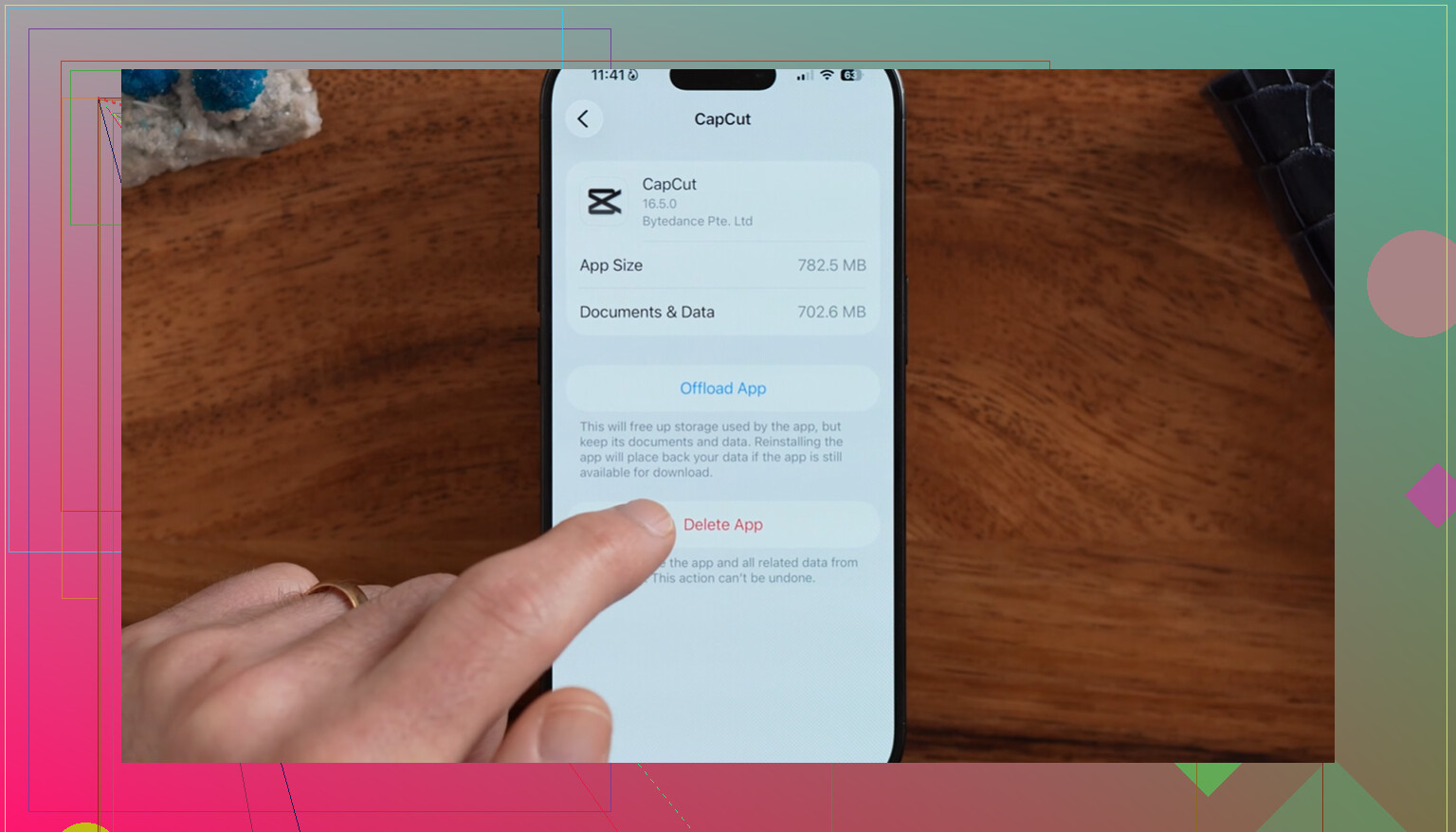
To check what is actually taking up storage, go to Settings, then General, then iPhone Storage. The bar at the top gives you the category breakdown, and the app list shows the exact space each app is using. System Data near the bottom can also grow from caches, logs, and temporary files that iOS doesn’t always clean up right away.
Once your phone gets down to the last few gigabytes of free space, it can start acting slow. Apps open slower, the camera can lag, and switching between apps may feel rough. Emptying Recently Deleted helps, but it usually does not solve the whole problem. Most of the storage is often still sitting in the photo library itself.
Clever Cleaner is useful for the part that Apple’s trash folders don’t really cover: cleaning up large media files, repeated shots, and screenshots. It’s free, with no ads and no subscription.
After you clear the built-in Recently Deleted folders, use it like this:
- Go to the Heavies tab first. It sorts files from largest to smallest and shows exact sizes. Deleting one or two huge videos can recover more space than clearing several trash folders.
- Then check Similars. It groups near-duplicate photos and picks a Best Shot, so you don’t have to compare every version of the same picture manually.
- Look through Screenshots too. Each one shows its file size, and old screenshots can add up faster than expected.
- All of the processing happens on the iPhone, so your media is not uploaded to an outside server.
The practical order is: clear Recently Deleted in Photos first, then check Files, Notes, Messages, and Mail. After that, clean up the photo library itself with Clever Cleaner, especially large videos and repeated shots. Try to keep at least 10 to 20 percent of your storage free if you want the phone to stay responsive.
10 Likes
Don’t use Select All first if you’re worried about mistakes. Open the Trash folder for that mail account, search for names/subjects you care about, move anything important back to Inbox or Archive, and only then delete the remaining trash in smaller batches. Empty Trash is final in most mail accounts once it syncs, so treat it like deleting from the provider, not just from the iPhone.
The mail provider matters more than the iPhone here. Mail is mostly just showing what exists on iCloud, Gmail, Outlook, Yahoo, or whatever account you added. If you empty Trash in the Mail app, you are usually emptying the account’s trash on the server too, not just cleaning up a local iPhone copy.
I agree with @viajeroceleste about not starting with Select All. I’d go even further and say the iPhone is not the best place to do the careful review if you have a lot of deleted mail. The tiny screen makes it too easy to miss dates, attachments, or the account you are actually inside.
Safest method, in my opinion:
- Open the email account in a browser on a computer if possible.
- Go to that account’s Trash or Bin folder.
- Sort by date, sender, or attachment size.
- Search for names, domains, order numbers, bills, travel words, work terms, etc.
- Move anything questionable back to Inbox, Archive, or a folder called “Keep” before deleting.
- Then empty Trash from the webmail side or go back to the iPhone and delete in chunks.
The reason I prefer webmail is that search is usually better there. Gmail, Outlook, and iCloud Mail all handle search and bulk moving more clearly than the iPhone Mail app. You can often see more messages at once, and you’re less likely to tap the wrong thing.
There’s another small trap here: make sure you are in the Trash for the correct account. In the Mail app, tap Mailboxes, then scroll down to the account section. Don’t just use a combined view if you have multiple accounts. You might think you are cleaning an old personal account and actually be deleting from work or iCloud.
If you are trying to free iPhone storage specifically, emptying email Trash may not do as much as expected. Deleted email storage is often counted against your email account quota more than your phone’s local storage. The Mail app can still keep cached messages and attachments for a while. If Mail is taking a huge amount of space under Settings > General > iPhone Storage, sometimes the bigger cleanup is removing the account from the phone and adding it back after you’ve cleaned it on the server. That forces Mail to rebuild its local cache. Don’t do that if you use POP mail or have any setup where messages only exist on the device, but for normal IMAP/iCloud/Gmail/Outlook accounts it’s usually fine.
I’d be careful with the advice to “Select All, then look through the list before confirming.” That sounds safer than it feels in practice. Once everything is selected, one bad tap can be permanent. I’d rather move the important stuff out first, then delete what remains. If there are thousands of messages, delete by date range instead: older than 2022, then older than 2023, and so on. Slower, but less nerve-racking.
For important stuff, don’t rely on Trash as storage. If you find messages you might need later, move them to Archive or a real folder. Trash is meant to disappear, and some providers auto-empty it after a set time anyway.
Clever Cleaner and similar photo cleanup apps are useful if your real problem is videos, screenshots, or duplicate photos taking space. They won’t protect or sort your Mail trash, though. For email, the boring method is still the safest: review on the provider’s site, rescue anything suspicious, then empty Trash only after the folder contains nothing you care about.
If this is a work or school account, check whether there’s a retention policy before emptying Trash, because you may not be able to recover mail the same way as a personal Gmail/iCloud account.
For personal mail, I’d filter Trash by “unread,” “flagged,” attachments, and recent dates first, then move anything suspicious out before deleting the rest. Don’t use Trash as a holding folder, since some providers clear it automatically.