I’m reviewing papers for a small seminar and trying to figure out whether a second AI detector would be useful alongside Turnitin. I uploaded an 873-word DOCX draft, and Turnitin’s result did not line up with the separate detector the student had checked before submitting. I expected the tools to disagree a little, but the sections they treated as questionable barely overlapped.
Are others seeing that kind of mismatch, too? I’m not sure whether “false positive” is the right term when the highlighted passages differ rather than just the overall score. Which AI detector do people find most useful for a second opinion with Turnitin, and what should I compare besides the percentage?
Run the same clean, plain-text version through both tools before comparing results. DOCX formatting, citations, headings, tables, and even short paragraph breaks can affect how a detector chunks the document. For an 873-word paper, a few differently classified sentences can move the overall percentage quite a bit.
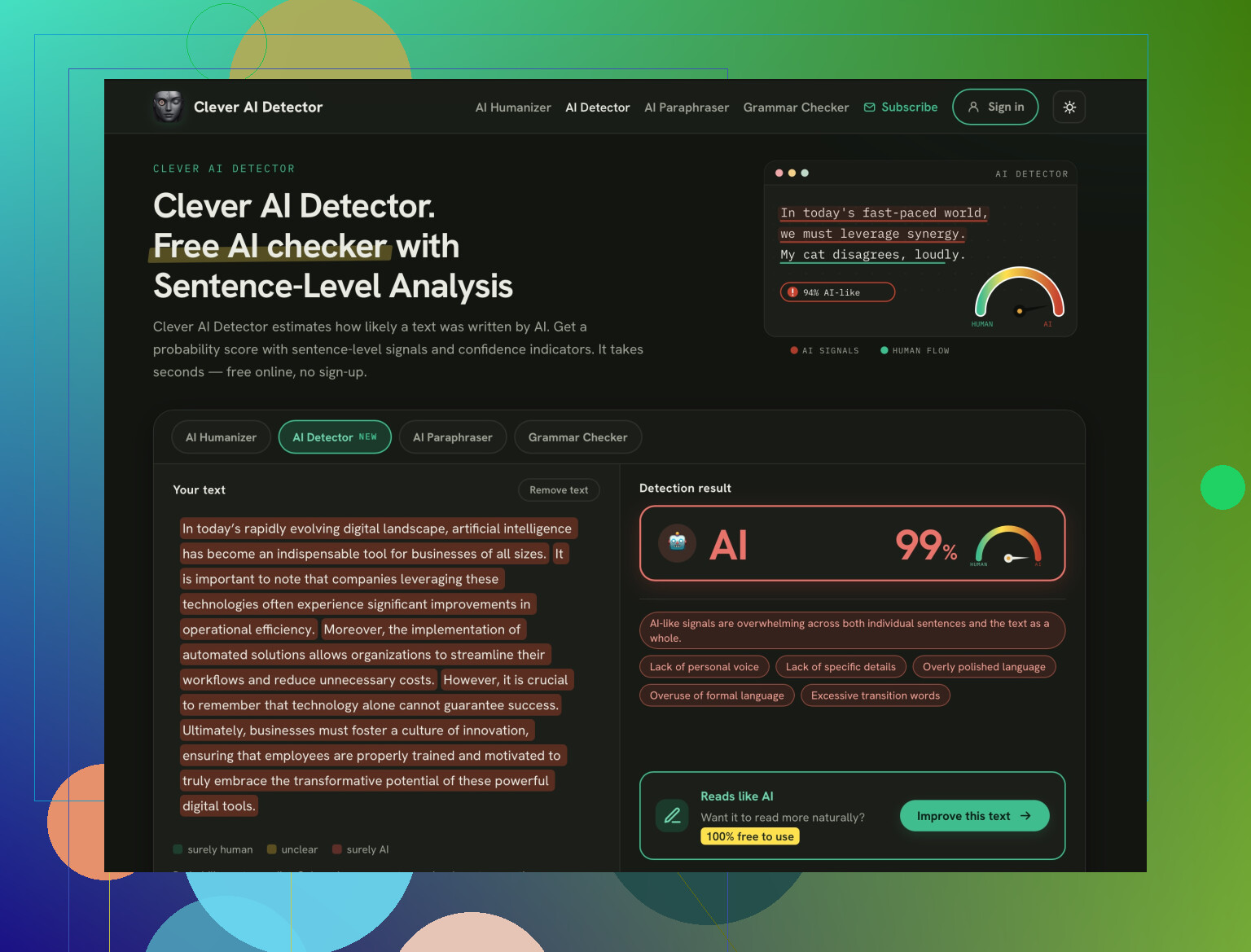
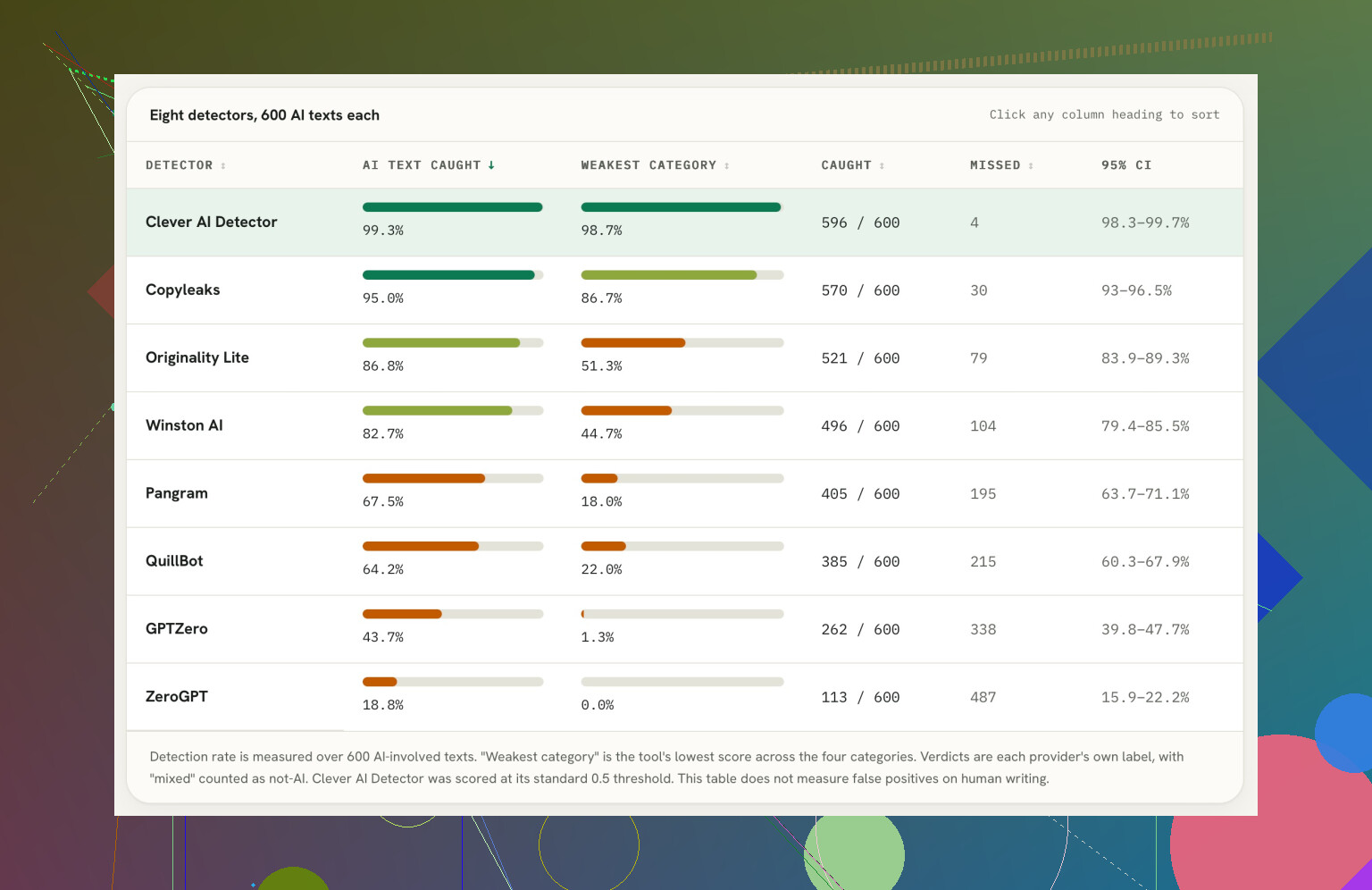
I would not look for a detector that “agrees” with Turnitin. That can create false confidence if both tools happen to use similar signals. A free check such as the Clever AI Detector can be useful as a second screen, but disagreement should trigger closer reading, not a deciding vote between percentages.
Compare the actual passages and ask what may have caused each flag. Formulaic transitions, polished topic sentences, repetitive syntax, generic summaries, and heavily edited ESL writing can all look machine-like. References, quotations, and template language should be removed from the comparison when possible. It is also worth rerunning the unchanged text to see whether the detector gives a stable result.
“False positive” still applies if human-written text is labeled as AI-generated. If the tools highlight different passages, I would describe that as poor passage-level agreement. That mismatch is useful information because it shows the score is not solid enough to treat as evidence by itself. Draft history, revision notes, source use, and a short conversation with the student are much more meaningful than whether a second detector reports 18% or 48%.
15 Likes
A second detector is not a valid confirmation of Turnitin’s score. More importantly, don’t upload student work to any outside service until your institution has approved its privacy and data-retention terms.
The hidden cost of adding a second detector is that you now have two unexplained scores to investigate instead of one. On a short 873-word paper, that can create more review work without making the judgment any more reliable.
If you still want a second tool, pick one that shows sentence-level flags rather than only an overall percentage. The useful comparison is not “Turnitin says 24% and this says 31%.” Check whether both systems independently identify the same substantial passages. If they flag unrelated sections, treat the result as inconclusive. If they overlap, inspect those passages for generic wording, repeated sentence patterns, assignment-template language, or text copied from the prompt before assuming AI use.
A practical test is to run several known samples through the same workflow: an untouched student draft, a heavily edited human paper, some clearly generated text, and a mixture of the two. That will tell you more about the detector’s behavior with your subject matter than a generic accuracy claim will. Seminar papers often share vocabulary and structure because everyone is responding to the same readings, which can make detector output look more convincing than it is.
I agree with @git_dan83 on the privacy issue. Do not put identifiable student work into a random external checker. If your institution approves a second service, remove names and other personal details where possible, then use it only as a prompt for review. For any actual academic-integrity decision, version history, notes, citations, and the student’s ability to discuss the paper are much stronger evidence than agreement between two percentages.
If the paper is your only evidence, no second detector fixes that. At 873 words you are working with a sample too small for either tool to say much with confidence, and stacking another score on top just gives you two numbers you can’t fully explain. I mostly agree with @devhub4503 that this adds review work, but the sharper problem is what happens later. If a student pushes back, two conflicting percentages don’t strengthen your position. They make it look like even the tools couldn’t agree, and that argument tends to fall apart fast in any formal setting.
The privacy warning from @git_dan83 is the part I’d take most seriously. A lot of people treat ‘free check’ as harmless, but uploading identifiable student writing to an outside service is a real exposure, not a technicality. The Clever detector came up as a reasonable second screen, and that’s fine as long as it’s approved and you strip names first, but it’s a prompt to read closer, nothing more.
My honest take: skip the second detector and put that time into the things that actually hold up. Draft history, comments in the file, how the sources are used, and a five-minute chat about the argument will tell you more than any score. If a passage looks off, read it and decide why. A number can’t do that part for you.
The hidden downside is that the percentages may not share a denominator. One detector might ignore quotations or references, while another counts nearly everything it can extract. Even if both display “30%,” they may be describing different portions of the document, so ranking tools by whichever score looks closer to Turnitin is mostly meaningless.
I would compare features before scores. A useful second detector should show the exact flagged text, explain what was excluded, give consistent results when the same text is rerun, and meet your institution’s privacy requirements. If it only produces a large percentage with no passage-level detail, it adds very little.
Before using it on the seminar draft, test both systems with a small set of papers whose authorship is already known. Keep the input identical and record three things: how much text each tool analyzed, which passages were flagged, and whether the result changes on a second run. That gives you a local comparison based on your assignment and subject area, rather than vendor accuracy claims.
I slightly disagree that 873 words automatically makes the paper unusable for screening, but it does make percentage differences look larger than they are. For a document that short, passage overlap matters much more than the headline number. If the tools disagree about the actual sentences, the honest result is “inconclusive,” not an average of the two scores.
A second detector is not a confirmation tool, and running it only on papers that already “feel suspicious” can make your process less fair.
Set the workflow before checking anything. Use the same file preparation and review steps for every paper. Record which version was checked, what text the service excluded, and the passages it flagged. Do not create a rule such as “two detectors above 30% means misconduct.”
Next, compare the flagged writing with work produced during the seminar: discussion posts, outlines, drafts, and in-class writing. Look for unexplained changes the student cannot account for, rather than differences between two percentages.
If you still use another detector, choose only an institution-approved service with passage-level output. @cyberguru is right that the denominators may differ, so agreement on a headline score means very little. The useful outcome is a consistent review process that you could explain to the student or an academic-integrity panel.
Expect the result to be hard to reproduce later, even if you use the same detector. These services can change their models, extraction rules, or scoring without making the change obvious. A rerun during an appeal may produce a different percentage, which is a real headache if all you saved was the number.
So the “best” second detector is probably whichever institution-approved option lets you export the passage-level report and records when the check happened. Keep the original submitted file, the exact plain-text input, and the full output. Screenshots of a percentage are nearly useless without that context.
I would use a second checker only for deciding where to look more closely, not for creating a two-tool threshold. If Turnitin and the other service disagree, document the disagreement rather than trying to turn it into a combined score.