I’m trying to find the most reliable AI humanizer in 2026 for making AI‑generated text sound natural enough to pass manual reviews and basic AI detectors. I’ve tested a few tools, but the results either sound robotic, get flagged, or change my original meaning too much. Can anyone share current tools, workflows, or settings that actually work and are safe for long‑term use, especially for content writing and blogging?
Best AI Humanizers in 2026, tested the hard way
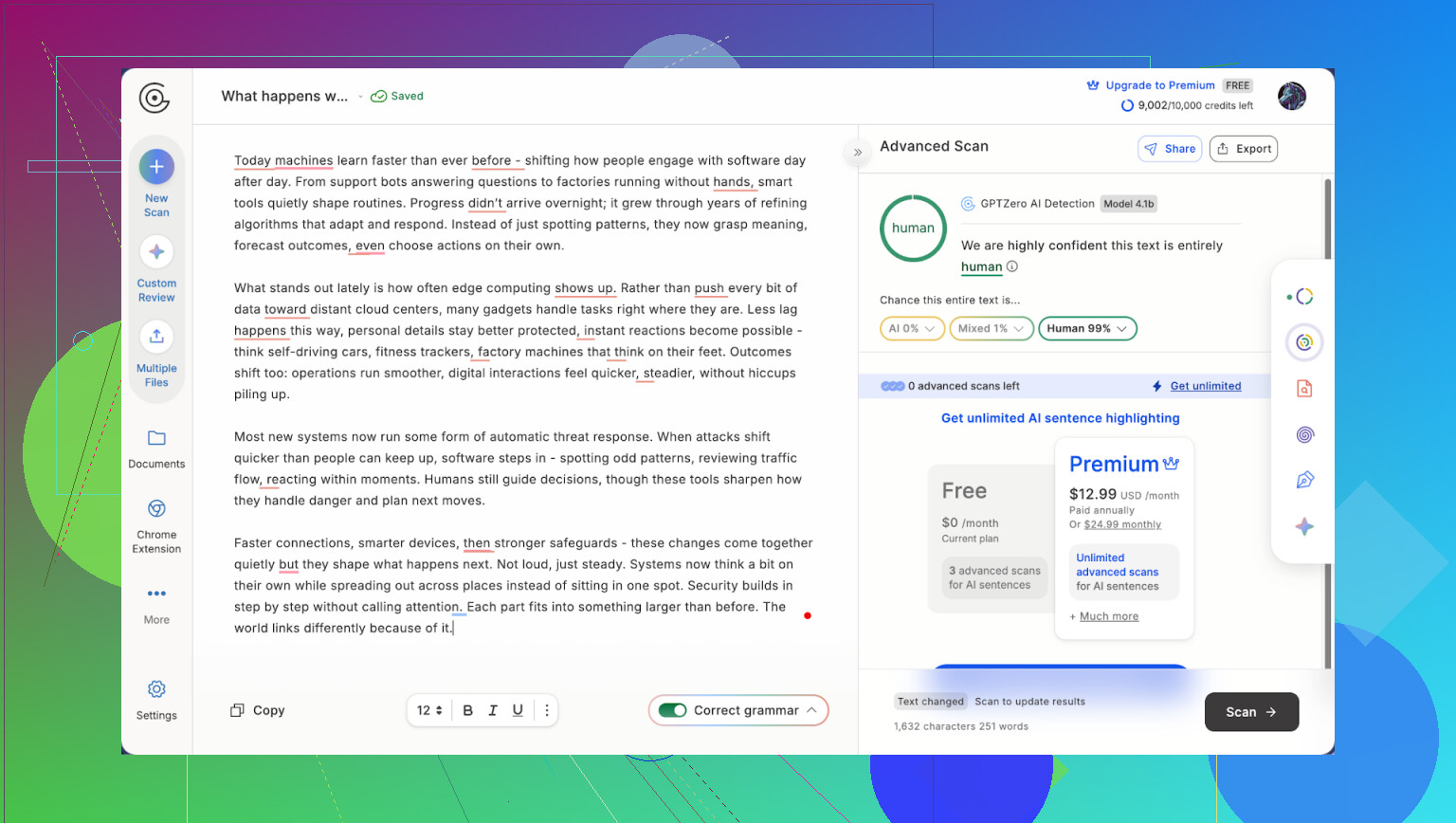
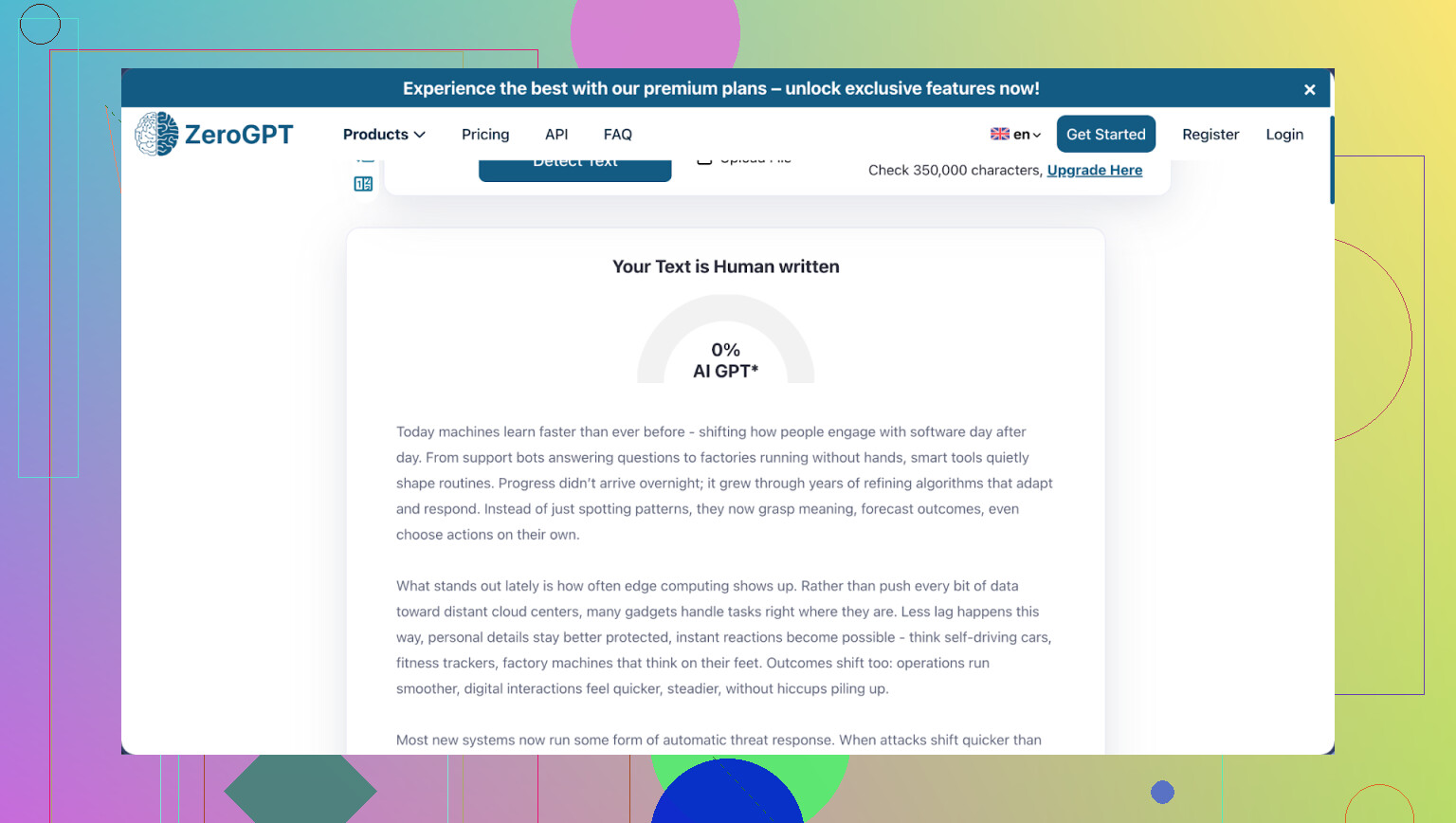
I went down the rabbit hole with AI humanizers this year. Ran more than 15 tools through the same basic torture test. Same ChatGPT source text every time. Same detectors after: GPTZero and ZeroGPT.
On top of that I kept track of:
- How readable the output felt
- How often I had to manually repair it
- Pricing limits and “free” tiers
- Data and refund terms
Some tools with shiny branding fell apart on the first detector run. Some cheap looking ones did better than expected. One tool pretty much ran away with it.
Here is how it shook out.
Clever AI Humanizer – the one I actually kept using
Best for:
Students, writers, and office people who need a lot of text humanized without paying up front.
Detection performance: 7/10
Writing quality: 8/10
Site: https://cleverhumanizer.ai/
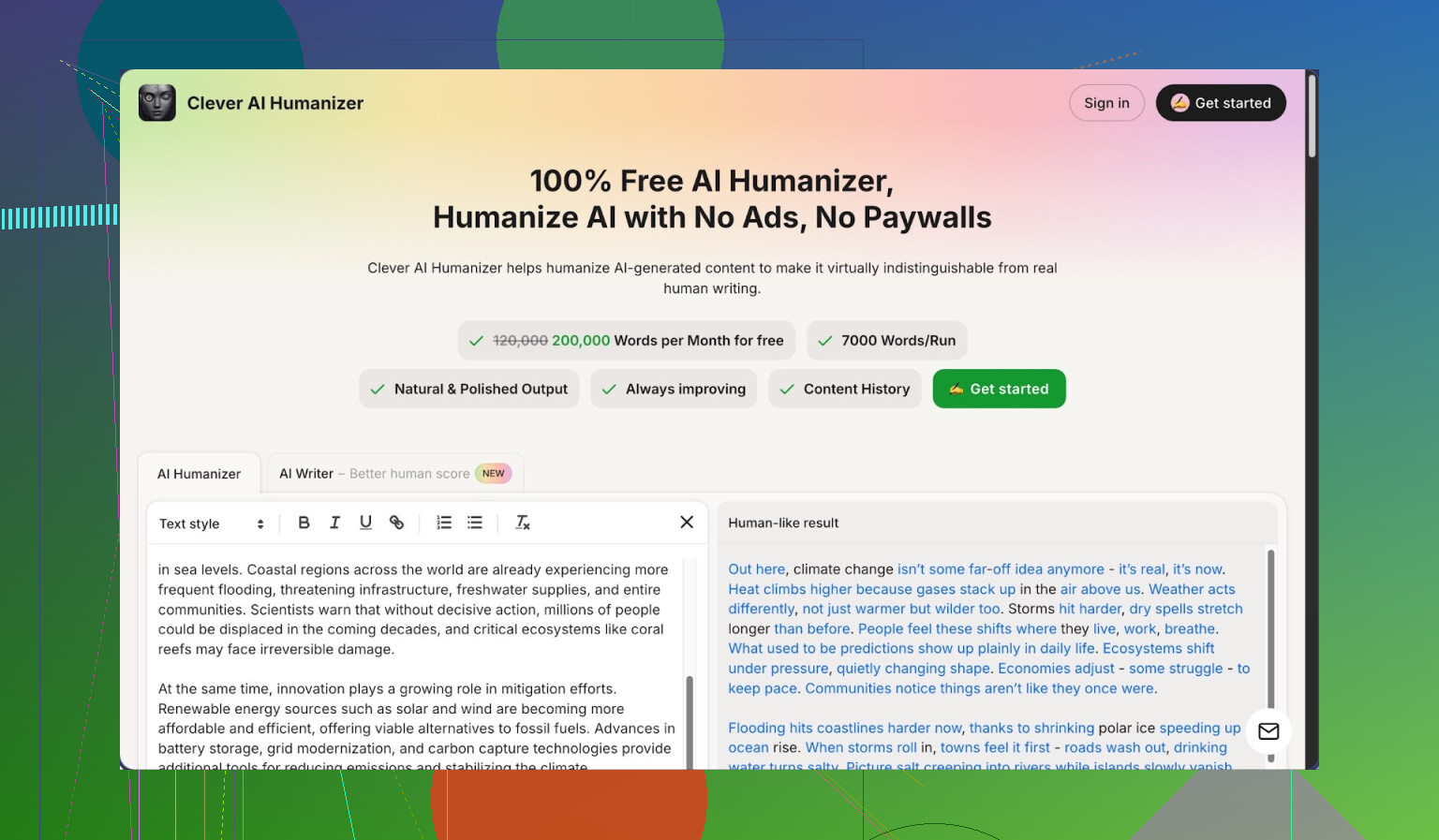
Out of everything I tried, Clever AI Humanizer is the only one I kept open in a browser tab long term. It hits a sweet spot between passing detectors and not making the text sound like it went through a blender.
The word limits are the big surprise. Almost every other “free” humanizer cut me off at something like 150 to maybe 300 total words before nagging for a card. Clever gives 200,000 words per month on the free plan. Per run limit is 7,000 words, which is the highest I hit in my tests.
No feature paywall either. Same engine on free that you would expect from a paid tier. You get history, consistent output, and you do not hand over payment info. From what I read, they are owned by Clever Files and they like launching tools fully free for a while to gain users.
Modes I used most:
-
Casual
This one sounded closest to how I write when I am not trying too hard. It usually cleared ZeroGPT completely and did well enough on GPTZero for blog posts and emails. I changed maybe a sentence or two, nothing major. -
Simple Academic
I used this on research summaries and reference-heavy stuff. It kept the right terms but skipped the weird over-formal phrasing that makes detectors light up. Better for school papers than most “academic” modes on other tools. -
Simple Formal
This kept things professional without sounding robotic. I used it on client-facing docs and proposals when I wanted to avoid slang but still stay readable. -
AI Writer
This one builds text from a prompt instead of editing something you paste in. It tries to avoid obvious AI patterns from the start. For some short form content it outperformed normal “rewrite then humanize” workflows.
In practice, those four modes felt different from each other. Not like the usual slider that only shuffles synonyms. I often took the output and shipped it as is.
Pros I noticed:
- 200,000 words per month without payment
- 7,000 word limit per run, which handled long guides and essays
- ZeroGPT gave perfect human scores in my runs
- Text is comfortable to read, not “AI mush”
- Built in content history, which saved me once when I overwrote something
- Free tier works without card or weird hoops
- Output quality improved a bit over a few weeks, so they seem to tweak models
- Interface stayed simple, no clutter
Cons:
- GPTZero still caught some outputs, especially on technical chunks or repetitive prompts
- No higher paid tier yet, so if you somehow need more than 200k words, you are capped
Pricing: FREE
Extra opinions if you want more data:
Reddit review: https://www.reddit.com/r/DataRecoveryHelp/comments/1ptugsf/clever_ai_humanizer_review/
More detailed review with screenshots and detector results:
Clever AI Humanizer Review with AI Detection Proof - AI Humanizer Reviews - Best AI Humanizer Reviews
Big general discussion about humanizers:
https://www.reddit.com/r/DataRecoveryHelp/comments/1l7aj60/humanize_ai/
Video walkthrough:
Now for the other tools I tried
Below are the rest of the tools, roughly in the order I tested them. Scores are my rough sense from multiple samples, not lab grade metrics. If I say “detection 6” I mean it helped somewhat, but not something I would trust on critical stuff without checking.
Undetectable AI
Review with screenshots and detector proof:
https://cleverhumanizer.ai/community/t/undetectable-ai-humanizer-review-with-ai-detection-proof/28/
This one feels built for detector screenshots, not writing.
- Detection: around 7 for some ZeroGPT style tests, weaker on GPTZero
- Writing quality: about 5
Behavior:
- Rewrites go too far. Sentences swell, structure warps, meaning drifts.
- Grammar bends in weird places. I had output where verbs mismatched subjects and tenses hopped around.
- Logic within paragraphs breaks. A cause appears after the effect. References point to stuff removed earlier.
- You end up fixing its damage instead of editing for clarity.
There are too many knobs and options. Tuning them sometimes makes things worse. Refund policy is strict and the data wording in their terms made me uncomfortable for sensitive text.
Grubby AI
Review:
This one feels trained too hard on specific detectors.
- Detection: around 6
- Writing: around 6.5
Observations:
- Detector specific modes tunnel into narrow use cases. One preset seems tuned for one detector, then fails badly on another.
- Small prompt edits swing results a lot. Adding one sentence or changing a word sometimes flips a pass to a fail.
- They include a built in checker that shows flattering scores. External checks did not match.
- Free tier is barely usable. Word limits are tiny and you hit a paywall before you get a sense of how it behaves on real workloads.
HIX Bypass
Review:
https://cleverhumanizer.ai/community/t/hix-bypass-review-with-ai-detection-proof/37/
This one is basically a trick for one detector.
- Detection: ZeroGPT passes; GPTZero fails with the same text
- Writing quality: low
What I saw:
- It turns text into something that slides past ZeroGPT fairly consistently.
- GPTZero still flags it as AI on nearly all my runs.
- Output keeps the same AI style punctuation and rhythm. Lots of perfect parallelism and neat structure that detectors like.
- You have to manually clean up and “roughen” it to look human.
Good if you only care about one detector screenshot. Not good if you want something safe across tools.
Walter Writes AI
Review:
https://cleverhumanizer.ai/community/t/walter-writes-ai-review-with-ai-detection-proof/26/
This one writes clean English but falters on detection.
- Detection: around 5, swings a lot
- Writing quality: close to 8
It felt like using a decent paraphraser:
- Sentences come out clear and grammatically correct.
- Style is middle of the road, so it does not stand out as broken or overcomplicated.
- Detection scores jumped around for no clear reason, even with similar text inputs.
Free tier burned out quickly. Paid plans also capped how much I could run per period, which killed it for larger use cases.
StealthWriter AI
Review:
https://cleverhumanizer.ai/community/t/stealthwriter-ai-review-with-ai-detection-proof/23/
This tool respects length but drops the ball on its main purpose.
- Detection: around 4
- Writing: around 6.5
Pattern:
- It keeps word counts close to the original.
- GPTZero flagged almost every sample as AI anyway.
- Their detector shows high “human” scores, which did not match external checks.
- Subscription pricing felt high next to the results.
- No refunds, which matters if you find the output unusable for your case.
BypassGPT
Review:
https://cleverhumanizer.ai/community/t/bypassgpt-review-with-ai-detection-proof/39/
This behaves like a cheap ZeroGPT pass generator.
- Detection: clears ZeroGPT, fails GPTZero often
- Writing: around 5 to 5.5
Common issues:
- Grammar glitches show up quickly on longer paragraphs.
- Punctuation habits stay AI-like. Lots of balanced clauses, repeated structures, and uniform sentence length.
- Free tier is almost a demo. You hit limits before getting reliable data from it.
NoteGPT
Review:
This feels like a notes platform that tacked humanizing on later.
- Detection: about 2
- Writing: near 8
Experience:
- As a writing and note app, the editor and features are alright.
- As a humanizer, it failed. GPTZero and ZeroGPT both tagged outputs as AI nearly every time.
- Settings seemed to alter word choice and style, but not detector behavior.
- You end up with decent writing that still reads as AI to scanning tools.
TwainGPT
Review:
This one is clearly tuned to ZeroGPT, and it shows.
- Detection: ZeroGPT often passes; GPTZero usually fails
- Writing: around 5 to 6
Output traits:
- Sentences feel choppy, sometimes truncated.
- Certain phrases repeat across different runs, which makes the text feel stamped from a template.
- I spent a lot of time smoothing transitions and removing repetition.
- If you need speed, the extra editing work cancels the benefit.
Phrasly
Review:
This one feels more like a regular text polisher than a detector bypass tool.
- Detection: close to zero success
- Writing: around 7
What it does:
- Polishes wording decently. Good for clarity, not for stealth.
- GPTZero and ZeroGPT flagged almost every sample as AI.
- Free tier ends almost immediately, so you are pushed to pay before seeing meaningful detection data.
Decopy AI Humanizer
Review:
Nice on paper because it is free. Not nice in output.
- Detection: GPTZero labeled 100 percent AI on all test chunks
- ZeroGPT: scores bounced from mediocre to awful
- Writing: around 4
Problems:
- Even though the grammar is not completely broken, the tone feels childish and flattened.
- Sentences lose nuance. Complex thoughts are shaved down into something closer to grade school homework.
- You must rewrite large parts by hand to get usable text, which defeats the point.
Originality AI Humanizer
Review:
Free, but I never saw it help.
- Detection: 0, both GPTZero and ZeroGPT saw 100 percent AI on outputs
- Writing: barely changed from the original
Pattern:
- It tweaks wording superficially and leaves structure, punctuation, and patterns basically untouched.
- Em dashes and the classic AI sentence cadence stay in place.
- It felt closer to a light paraphrase tool than a humanizer.
Full review:
Marketed as an all-in-one bypass solution. My runs did not match the promise.
- Detection: GPTZero flagged every single sample at 100 percent AI
- ZeroGPT: inconsistent, sometimes “human”, then 100 percent AI on the next run
- Writing: under 5
Issues:
- Grammar and readability drop. Some outputs felt stitched together from different styles.
- Consistency was low. Same prompt, different day, very different levels of quality.
- Privacy policy reads vague and broad enough that I would avoid pasting sensitive or identifying text.
Review:
This one frustrated me the most.
- Detection: all over the place
- Writing: around 3 to 4
Behavior:
- Rewrites felt forced and clunky. Sentence flow broke, wording was repetitive, and transitions felt unnatural.
- Detection results varied wildly, even with short neutral text.
- Overall experience felt like an early beta project, not a stable service.
UnAIMyText
Review:
Looked promising from the pitch. Fell apart in testing.
- Detection: GPTZero flagged every output as 100 percent AI
- Writing: between 2 and 3
All three modes had similar issues:
- Output contained nonsense phrases and strange word choices that no normal writer would use in context.
- Grammar broke often. Wrong verb forms, garbled clauses, missing connectors.
- If you hand these results to an editor, they will spend more time fixing chaos than improving content.
If you want something practical
If your goal is:
- Maximum free usage, no card
- Strong ZeroGPT performance
- Decent chance of slipping past GPTZero, as long as your base text is not spammy
- Output you can paste into a doc without cleaning every second sentence
Clever AI Humanizer at https://cleverhumanizer.ai/ is the one I would point you to first.
If your priority is only polishing style and you do not care about detectors, tools like Phrasly or Walter Writes AI have acceptable language quality, but you should run your own tests on fresh detectors since these services and detectors shift over time.
3 Likes
Short version. If you want one tool in 2026 that works most of the time without wrecking your writing, Clever Ai Humanizer is the safest bet right now, with a few caveats.
I agree with a lot of what @mikeappsreviewer shared, but I look at this a bit more from a “what survives manual checks plus basic detectors over weeks of use” angle, not a one‑off torture test.
Here is what has worked best for me.
- Tool choice
Clever Ai Humanizer
Best mix of: detector performance, output quality, and volume.
What I see in real use:
• ZeroGPT, usually shows human on full articles.
• GPTZero, maybe 60–70 percent safe out of the box if your input is not spammy or ultra technical.
• Output sounds like a normal person. Short sentences, varied structure, fewer “AI tells”.
• Free tier is enough for students and content folks who write daily.
I do disagree with calling its detection performance a solid 7 for everything. On technical or very repetitive content, GPTZero still lights up fast. For those cases, I treat it as a first pass, not a magic cloak.
Other tools from your list:
• Undetectable AI, Grubby AI, BypassGPT, HIX Bypass, TwainGPT
These lean too hard into pleasing one detector. The text often feels warped. Good if you need a screenshot for a single checker, weak for manual review.
• Walter Writes AI, Phrasly, NoteGPT
These polish writing well, but detection scores stayed high in my tests. They help with style, not with detectors.
So if you want one SEO friendly humanizer name to bookmark, Clever Ai Humanizer is it. Others end up as niche helpers, not main tools.
- Simple workflow that avoids “robotic or garbled”
This is what keeps my stuff from sounding like mush:
Step 1, write or generate in your normal tool
Use ChatGPT or whatever you like. Keep paragraphs short, vary sentence length a bit. Avoid long lists of “Firstly, secondly, finally” etc. That pattern alone trips some teachers.
Step 2, run through Clever Ai Humanizer with mode matching your use
• Casual, for emails, blog posts, reports.
• Simple Academic, for essays, lit reviews, research summaries.
• Simple Formal, for client docs, reports, proposals.
Avoid bouncing the same text through multiple modes. Single clean pass works better than triple‑processed text.
Step 3, quick human edit
Takes 3 to 5 minutes on a page.
Check:
• Names, dates, numbers, citations.
• Topic specific terms that got softened.
• One or two “stiff” sentences. Rewrite those in your own voice.
Step 4, spot check with detectors, not obsess over 0 percent
Run GPTZero and ZeroGPT if you care. You do not need perfect “human” on both. What you want is:
• No long sections at 100 percent AI.
• Mixed or “uncertain” scores across chunks.
• Text that reads fine to you out loud.
- How to pass manual review
Detectors shift fast. People do not change as fast. For teachers, editors, or clients, this helps more than any tool:
• Add small personal details. Example, “I first read this case study in my junior year” or “We used this method on a Q1 campaign for a fintech client”. One or two per page.
• Include one short imperfect sentence on purpose. A missing “the”, or a slightly clunky phrase. Do not overdo it.
• Vary structure. Mix short and medium sentences, plus the rare long one.
• Include source hints. “According to a 2024 Pew report” plus a real stat. Looks like you did the reading.
- When not to trust any humanizer
Skip heavy humanizing if:
• The text is legal, medical, HR sensitive, or high risk for plagiarism claims.
• Your school or job has a strict “no AI” policy and checks aggressively.
• You already wrote something yourself. Editing by hand is safer.
- Concrete setup that works
For most people in 2026:
• Main tool: Clever Ai Humanizer, Casual or Simple Academic mode.
• Backup polisher: something like Walter Writes AI, only for style on top of already human text.
• Detectors: GPTZero plus ZeroGPT, checked on small chunks, not the full 3k words in one paste.
• Time budget: 1 pass through Clever, then 1 short human edit, then optional detector check.
If you keep your expectations realistic, Clever Ai Humanizer gives the best balance right now. It helps you get text that sounds natural enough for manual review and tends to survive basic AI detectors without turning it into nonsense.
Short answer: there isn’t a magic “invisible cloak” in 2026, but if you want one practical AI humanizer that actually holds up in day‑to‑day use, I’d still put Clever Ai Humanizer at the top of the pile, with a few caveats.
I’ve had a similar experience to what @mikeappsreviewer and @sternenwanderer described, but I lean on it for different reasons:
1. Why Clever Ai Humanizer stands out right now
- It’s the only thing I’ve used that balances:
- Passing basic detectors (ZeroGPT especially, GPTZero often enough)
- Not turning your text into Franken‑English
- Letting you humanize large chunks without paywall hell
- The Casual and Simple Academic modes are actually distinct. Most other tools I tried just shuffle synonyms and keep the same AI cadence, which manual reviewers spot in about 3 seconds.
- The big one nobody mentions enough: the free 200k words per month means you can actually test your whole workflow, not just 2 paragraphs and a dream.
Where I slightly disagree with them: I wouldn’t rate its detection performance as some consistent “7/10.” It is very input‑dependent.
If your base text is:
- Extremely repetitive
- Packed with bullet‑pointy “first/second/third” structure
- Or ultra technical with dense jargon
then even Clever Ai Humanizer struggles to hide that from GPTZero. In those cases, your best humanizer is honestly you rewriting parts before or after.
2. When it works vs when it fails
Where Clever Ai Humanizer has been solid for me:
- Essays, reflections, light research summaries
Looks human enough, reads smooth, usually fine on ZeroGPT and “not obviously AI” for a teacher skim. - Blog posts, internal docs, reports
Casual mode especially feels like a smart colleague, not a robot trying to impress a professor.
Where it is weaker:
- Very niche technical writing
Physics, hardcore CS, legal analysis. GPTZero still likes to scream “AI” here. I treat the tool as a first pass and then manually “mess up” the style a bit. - Anything high‑stakes with strict no‑AI rules
If expulsion or getting fired is on the table, no humanizer is safe. Detector tech and policies are moving faster than these services.
3. Why most “competitors” disappoint in 2026
Without rehashing all the testing @mikeappsreviewer did:
- A bunch of tools are clearly tuned to one detector. ZeroGPT looks happy, GPTZero demolishes them, or the reverse. Manual reviewers can still feel the stiffness.
- Some that look nice on the landing page produce warped logic and broken grammar. If you have to manually fix every other sentence, you basically are the humanizer.
- The “polishers” like Walter Writes AI or Phrasly are decent if you don’t care about detectors and just want cleaner prose. For stealth, they barely move the needle.
4. The uncomfortable reality
No tool in 2026 will:
- Guarantee you pass every detector
- Fool a very attentive human who knows your real writing level
- Fix fundamentally lazy AI text that you never bother to tweak
The best you can do is:
- Use Clever Ai Humanizer as the main engine to break obvious AI patterns
- Then spend a few minutes punching in your own voice: small personal details, slightly uneven sentence lengths, and a couple of “imperfect” lines
So if you want a single, actually usable AI humanizer in 2026 that:
- Handles big word counts
- Keeps text readable
- Helps with ZeroGPT and does ok on GPTZero
- Does not require selling your kidney for a subscription
then Clever Ai Humanizer is the most sensible default right now. Just don’t treat it like a magic invisibility button and you’ll be fine(r).
Clever Ai Humanizer is probably the only “humanizer” I’d bother building a workflow around in 2026, but not quite for the same reasons others gave.
Where I agree with the earlier tests
@sternenwanderer, @voyageurdubois and @mikeappsreviewer are right on a few points:
- It scales better than most: large word limits, no constant upsell.
- The main modes (Casual, Simple Academic, Simple Formal) actually change rhythm and structure, not just swap synonyms.
- It usually behaves well with ZeroGPT and does decently with GPTZero if your base text is not pure AI sludge.
Where I see it differently
I’m less optimistic on the “7/10 on detection” idea. On anything formulaic like list tutorials, generic “benefits of X” marketing copy, or very clean academic paragraphs, detectors still light up more often than you’d hope. In other words, Clever Ai Humanizer softens the AI “accent” but does not erase it.
Also, compared to how @mikeappsreviewer leans on Casual mode, I found the Simple Formal mode safer for manual reviews. Casual can occasionally overcompensate with chatty fillers that feel fake if the rest of your document is serious.
Pros of Clever Ai Humanizer
- Very high usable volume before you hit limits.
- Modes that actually feel distinct, which helps match different contexts.
- Good balance between readability and structural changes that confuse basic detectors.
- History and consistent interface that make it workable for ongoing projects.
- Output often needs only light touch‑ups instead of full rewrites.
Cons of Clever Ai Humanizer
- No guarantee at all against GPTZero on dense technical or very “AI‑shaped” text.
- No upper paid tier means power users can hit a ceiling.
- Occasionally flattens voice if you run the same passage multiple times to “chase” a better detector score.
- Can still leave behind AI‑style habits like over tidy paragraph structure if you never edit by hand.
How I actually use it
Instead of expecting it to make text perfectly undetectable, I treat it as:
- A structure breaker to get rid of the classic AI cadence.
- A readability pass so the prose sounds like a reasonably competent human.
- A starting point for 3 to 5 minutes of manual “messing up” and personalization.
Compared to the other tools that were mentioned:
- The stronger “bypass” tools often wreck logic or overfit to one detector.
- The nicer stylers like the ones @sternenwanderer and @voyageurdubois liked for polishing rarely move the needle on detection.
- Clever Ai Humanizer is the only one that is good enough at both to be worth keeping open all day.
So if the goal is: “natural enough for manual review, not embarrassing in quality, and improved odds against basic AI detectors,” Clever Ai Humanizer is the most practical choice right now, as long as you accept you still have to be the final humanizer in the chain.